Lakshvera Global Ventures
Chilli Products

Whole, Ground or Flakes? Choosing the Right Spice Form for Your Business
By Lakshvera Global Ventures Sourcing Guide
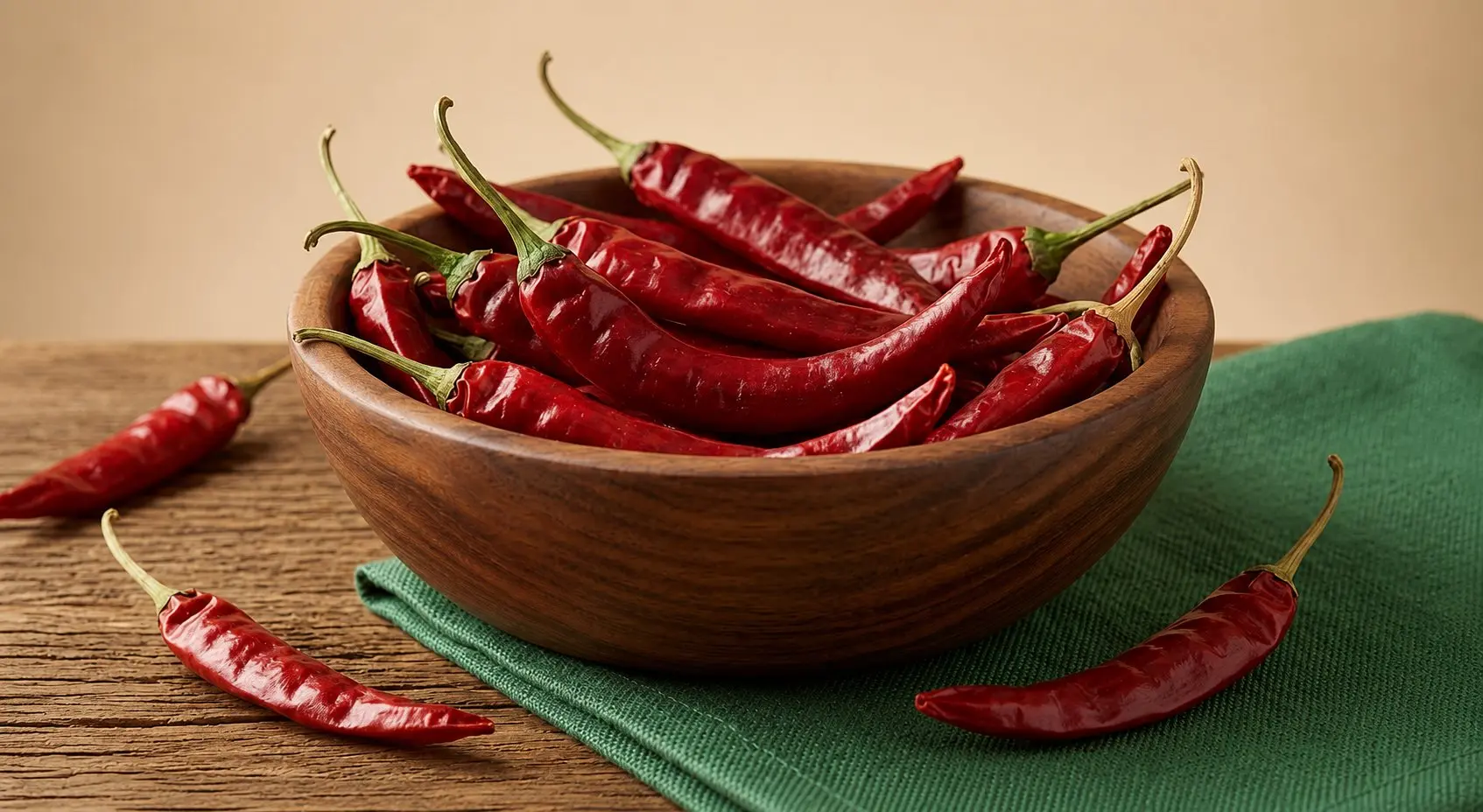
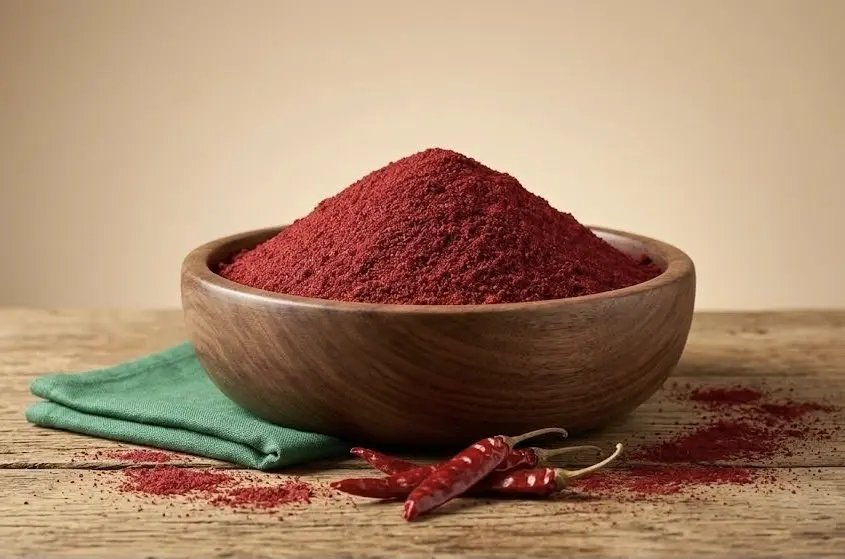
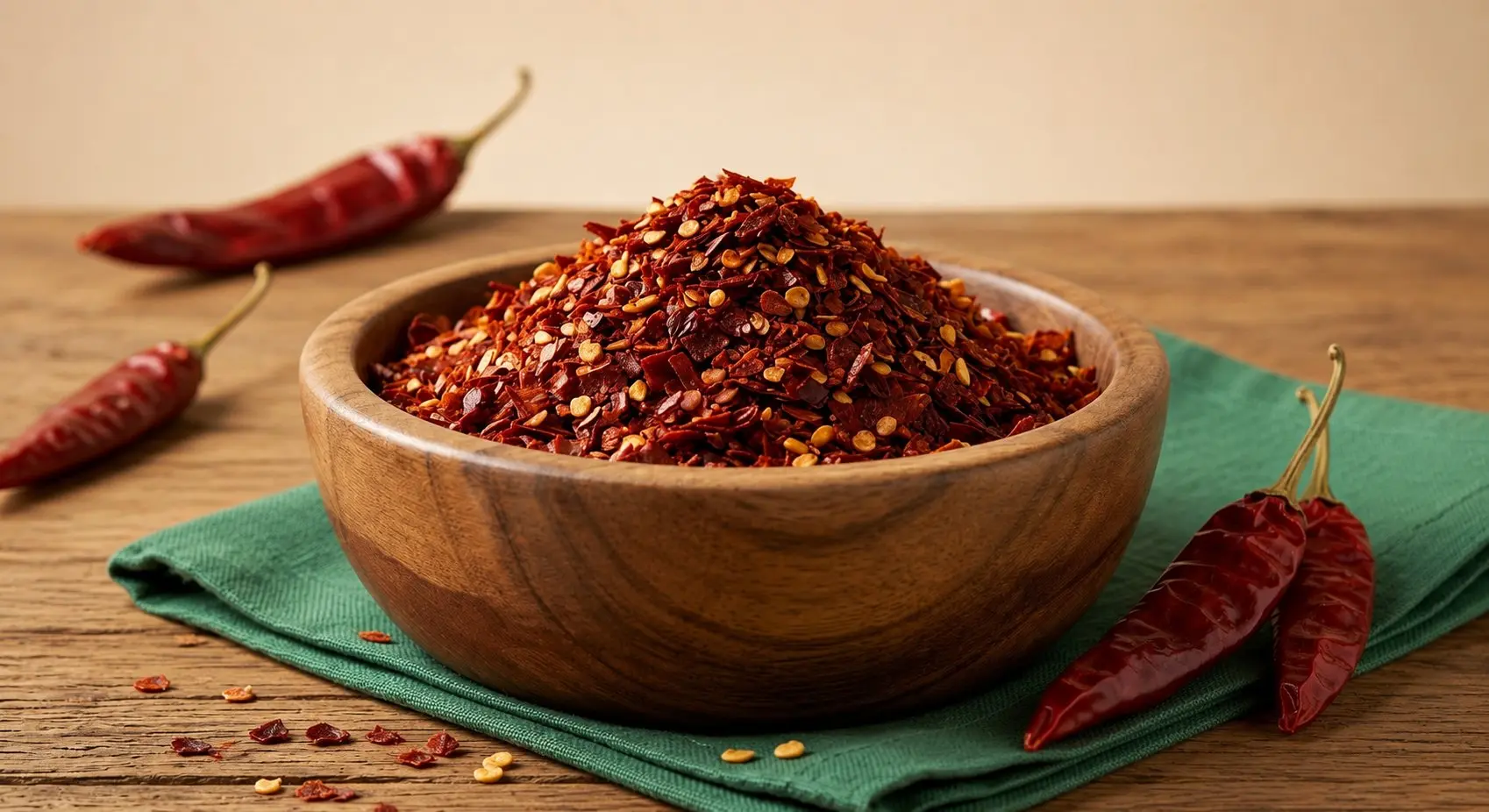
Whole dried red chilli Red chilli powder Red chilli flakes

For a procurement manager sourcing spices internationally, the same crop can arrive at the port in three very different forms — and each one behaves differently once it reaches a factory floor, a commercial kitchen, or a private-label packing line. Red chilli, for example, can be supplied whole, ground into powder, or cut into flakes. Cumin and coriander follow a similar pattern, though not every spice is commercially available or commonly traded in all three formats.

Choosing between whole, ground and flake formats is not a matter of preference alone. It depends on what the buyer's factory can process, what texture the final product needs, how the ingredient will be stored and packed, and what the finished food product is meant to look and taste like. Getting this decision right affects production efficiency, ingredient consistency, and the final quality of the product on the shelf.

This guide walks through what each spice format actually is, when each one makes sense for a B2B buyer, and what questions to ask a supplier before placing a bulk order.

What Are Whole, Ground and Flaked Spices?

Before comparing applications, it helps to be clear on what each term actually means in a trade context.

Whole Spices

Supplied in their natural, unprocessed or minimally processed form — the seed, pod, or dried fruit as harvested and cleaned. Cumin seeds, coriander seeds, and whole dried red chilli are common examples.

Ground Spices

Whole spices milled into powder, typically to a specified particle size or mesh. Chilli powder, cumin powder, and coriander powder are widely used ground spice products.

Spice Flakes

Produced by cutting or crushing the dried spice into coarser, visible pieces rather than a fine powder. Chilli flakes are the clearest example of this format in international trade.

Not every spice is commercially offered in all three forms. Some spices are almost always traded whole, some are more commonly ground, and only a smaller number — chilli being the clearest example — are widely available as flakes. Flakes are not simply "coarse powder" — the cutting or crushing process, piece size, and seed content are usually controlled separately from powder production.

Whole Spices: When Are They the Right Choice?

Whole spices are generally the right choice for buyers who have in-house processing capability, or who want control over how the spice is used downstream.

Further processing & custom grinding — full control over particle size, blend ratios and final product characteristics
Flexibility across end uses — one lot can be directed to different uses depending on order requirements
Particle-size control — the buyer decides exactly how fine or coarse the final product should be
Storage — relatively stable, though actual shelf life depends on moisture, packaging and storage conditions

Whole spices suit buyers with in-house processing lines, spice traders who re-sell in different forms, and businesses that value control over the final grind more than ready-to-use convenience.

Ground Spices: When Are They the Right Choice?

Ground spices are the practical choice when a business needs an ingredient that goes straight into production without additional processing.

Ready-to-use convenience — a consistent powder that can be weighed and added directly to a formulation
Spice blends & seasoning — a core input for masala blends, dry rubs, marinade powders and seasoning systems
Consistent particle size — mesh size directly affects how the powder disperses, coats, or blends
Why specifications matter — particle size and colour should be agreed before ordering

Ground spices generally suit food manufacturers, spice blenders, and private-label brands that need a stable, ready-to-use ingredient rather than raw material for further processing.

Spice Flakes: When Are They the Right Choice?

Flakes serve a purpose that neither whole spices nor fine powder can fully replace: visible texture and appearance in the finished product.

Visible pieces & texture — chosen specifically to remain visible after application
Common applications — pizza seasoning, bakery toppings, snack coatings, table-top seasoning
Where appearance matters — visible spice pieces are part of the customer proposition
Not all flakes are interchangeable — flake size, seed content and cut consistency vary by supplier

Whole vs Ground vs Flakes: Quick Comparison

No single format is universally "better" — the right choice depends on the buyer's application.

FactorWholeGroundFlakes
Processing requirementBuyer processes further (grinding, roasting)Ready to use as suppliedReady to use as supplied
ConvenienceLower — needs equipment & process stepsHigh — direct additionHigh — direct addition
Particle-size controlFull control retained by buyerSet by agreed mesh sizeSet by agreed flake size
Typical applicationsCustom grinding, blending, retail packsSeasoning blends, sauces, snack coatingsPizza seasoning, bakery toppings, garnish
TextureNatural seed/pod textureFine, uniform powderCoarse, visible pieces
Visual appearanceWhole seed or pod visibleNot usually visibleVisible pieces are the effect
Suitable buyer profileIn-house processors, traders, distributorsFood manufacturers, blenders, private labelFood-service, bakeries, snack & topping makers
Packaging considerationsStandard bulk bags; moisture & pest protectionMoisture-proof to protect powder consistencyProtect flake integrity, prevent crushing

How to Choose the Right Spice Form for Your Business
There is no single correct answer for every buyer. A practical decision framework should weigh the following:

1. End application — what product, and how is it used?
2. Required particle size — fine, coarse, or whole?
3. In-house processing capability
4. Desired texture — disappear or remain visible?
5. Visual appearance requirements
6. Processing requirements (roasting, sterilization)
7. Packaging suited to the specific spice form
8. Storage conditions at destination
9. Order volume — custom processing vs. standard spec
10. Destination-market import, labeling & quality expectations

A simple decision pathway:

Need further processing or full grind control? → Whole spices
Need a ready-to-use ingredient? → Ground spices
Need visible pieces & texture? → Flakes

The final decision still depends on the specific spice, the specific product, and the buyer's own operational setup — this framework is a starting point for that conversation, not a fixed rule.

What Should Buyers Ask an Indian Spice Supplier?

Before placing a bulk order, international buyers should be prepared to discuss — and request in writing — the following details:

Product specification (form, grade, intended use)
Botanical or common name, where relevant
Origin of the product
Grade and quality classification
Particle size or mesh size (ground / flakes)
Moisture specification, where applicable
Packaging format and material
Net weight per unit and per shipment
Minimum order quantity (MOQ)
Available quantity and lead time
Quality or testing documentation
Incoterm being quoted (FOB, CIF, etc.)
Port of loading and payment terms
Destination-market requirements (labeling, documentation)

Asking these questions upfront — and getting clear answers in writing — reduces the risk of misunderstandings once the shipment is in transit.

Why Product Specifications Matter in Bulk Spice Procurement

Two spice products can look nearly identical in a sample photo and still perform very differently once they reach an industrial production line. This is why specifications matter more in bulk procurement than in retail purchasing.

Particle size — affects dispersion, coating, and distribution
Cleanliness — foreign matter affects food safety and appearance
Moisture — influences shelf stability and clumping
Appearance — colour consistency affects shelf appeal
Batch consistency — allows a recipe to run without adjustment
Packaging — protects quality from dispatch to point of use

For illustration only — a buyer might specify something like "80 mesh, moisture below a stated percentage, free from visible extraneous matter" for a ground spice order. The exact numbers should always be agreed between buyer and supplier for the specific product and application.

How Lakshvera Global Ventures Approaches Spice Supply

Lakshvera Global Ventures is a Gujarat, India-based agricultural export company serving international B2B buyers, including food manufacturers, spice companies, ingredient distributors, and wholesale importers. Our product range includes chilli flakes, whole chilli, chilli powder, cumin seeds, coriander seeds, kalonji, sesame seeds, groundnuts, and cereals and millets such as wheat, bajra, and jowar.

Because buyer requirements differ by product, application, and destination market, our approach centers on discussing buyer-specific requirements before finalizing an order — including product specifications, packaging format, and export documentation needs. For a buyer evaluating whether whole chilli, chilli powder, or chilli flakes is the right fit, this typically starts with a conversation about the intended end use, the required particle or flake size, and the destination market's expectations, followed by agreeing on a written specification for the order.

Frequently Asked Questions

Whole spices are the dried seed, pod, or fruit in its natural form, while ground spices are whole spices milled into powder. Whole spices are usually chosen when a buyer wants to process the spice further or control the final grind themselves. Ground spices are chosen when a ready-to-use ingredient is needed directly for a formulation, blend, or recipe without additional processing.

Yes, ground spices are typically supplied ready to use, meaning they can be added directly into a food formulation, seasoning blend, or recipe without further processing. However, buyers should confirm the particle size (mesh) and other specifications match their intended application, since ground spices from different suppliers can vary in fineness and consistency.

Spice flakes are the right choice when a business needs visible pieces and a specific texture in the finished product, rather than a fine powder that blends in. Common examples include chilli flakes used as a pizza topping, bakery seasoning, or table-top seasoning in food-service settings, where visual appearance and texture are part of the product experience.

It depends on the manufacturer's process and product. Manufacturers with in-house grinding equipment may prefer whole spices for flexibility and control. Manufacturers producing sauces, blends, or prepared foods often prefer ground spices for convenience. Manufacturers making products where visible spice pieces matter, such as toppings or snacks, may choose flakes.

Yes. For both ground spices and flakes, particle size or mesh size can generally be discussed and agreed with the supplier as part of the order specification. Buyers should communicate their required particle size clearly and request confirmation in writing before finalizing a bulk order, since this directly affects how the ingredient performs in production.

Buyers should ask about product specification, origin, grade, particle size, moisture levels where relevant, packaging format, net weight, minimum order quantity, available quantity, lead time, quality or testing documentation, Incoterm, port of loading, payment terms, and any destination-market requirements. Getting these details confirmed in writing helps avoid misunderstandings during shipment.

Packaging options for bulk spices commonly include standard bags (such as 25 kg or 50 kg), jumbo bags for larger volumes, and custom packaging formats based on buyer requirements and destination-market standards. The right packaging depends on the spice form, order volume, storage conditions, and how the product will be handled after arrival.

Buyers should evaluate their end application, required particle size, in-house processing capability, desired texture and appearance, packaging and storage conditions, order volume, and any destination-market requirements. A simple starting framework: choose whole spices if further processing is needed, ground spices if a ready-to-use ingredient is required, and flakes if visible texture and appearance matter in the finished product.

Conclusion

There is no universally correct spice format. Whole spices, ground spices, and flakes each serve different business needs — from custom processing and blending flexibility, to ready-to-use convenience, to visible texture in a finished product. The right choice for your business depends on a combination of factors: the end application, your in-house processing capability, the specifications you require, your packaging and storage conditions, and any requirements specific to your destination market. Working through these factors before placing an order — rather than after receiving a shipment — is what separates a smooth bulk spice procurement process from a problematic one.

Looking for Indian Agricultural Products for Your Business?

Connect with Lakshvera Global Ventures to discuss your product specifications, quantity, and packaging requirements.