Sesame Seeds from India: A Complete Guide for Global Buyers
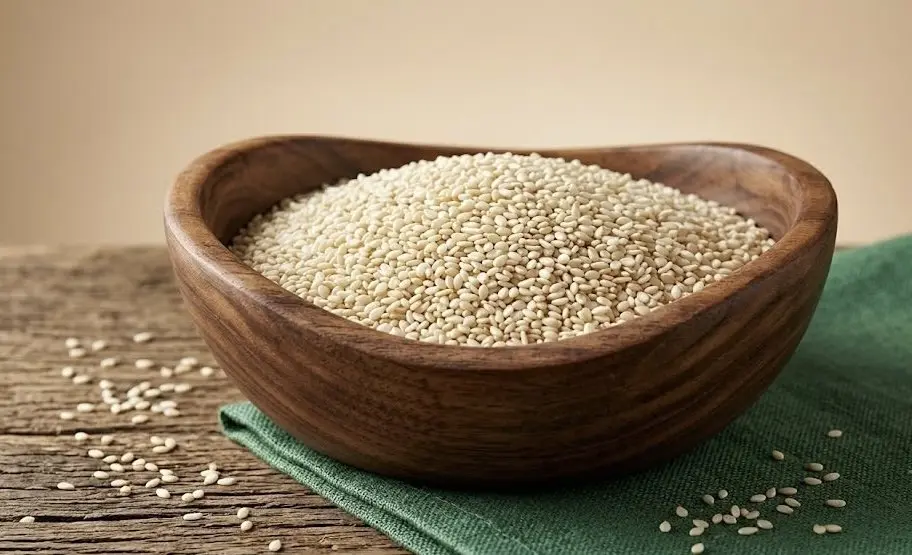
Ask any procurement manager who has sourced sesame seeds internationally and they'll tell you the real work starts after the first sample looks good. Can this purity level be held consistently across three container loads? What happens if moisture creeps up during the monsoon shipping window? Will the packaging survive a transhipment stop in Jebel Ali or Rotterdam? Is the paperwork going to hold up at customs?
These are not abstract concerns. For a bakery manufacturer running a fixed production schedule, or a tahini producer whose grinding line depends on a narrow oil-content band, an inconsistent sesame seed shipment isn't a minor inconvenience — it's a line-stoppage risk.
Lakshvera Global Ventures is an Indian agricultural products exporter working with international buyers who need dependable, specification-matched sourcing — not just a seed sample that photographs well. This guide covers what sesame seeds are, how they're graded, where they're grown, how they're processed, what documentation to expect, and what questions to ask before committing to a supplier.
About Lakshvera Global Ventures
Lakshvera Global Ventures is an India-based agricultural export company supplying spices, seeds, cereals, millets, oilseeds, and spice powders to international buyers. Our focus is on B2B sourcing — supplying importers, wholesalers, food manufacturers, distributors, and private-label brands rather than individual retail consumers.
Our approach centres on three things buyers consistently ask for: consistency in specification, transparency in communication, and dependability in supply. We work directly with buyers to understand the exact parameters their production or distribution requires — colour, purity, moisture tolerance, packaging format, and destination-market documentation — and align sourcing to those requirements rather than offering a single generic product across every order.
What Are Sesame Seeds?
Sesame seeds come from Sesamum indicum, an oilseed crop cultivated for thousands of years and now grown across Asia, Africa, and parts of the Americas. In trade and culinary contexts, sesame is also referred to as til in India. The seeds are small, flat, and oval, typically ranging from about 3 to 4 millimetres in length, with a thin outer hull that can be left intact (natural/unhulled) or removed (hulled), depending on the intended use.
Commercially, sesame seeds matter for two main reasons: they carry a high oil content, making them a raw material for sesame oil extraction as well as a functional food ingredient, and their nutty flavour — which intensifies with roasting — makes them valuable across bakery, confectionery, snack, and seasoning applications.
Types of Sesame Seeds
International buyers generally encounter the following broad categories. Availability of a specific type or grade depends on sourcing and processing capability as well as the buyer's own specification.
White Sesame Seeds
The most widely traded colour category, used across bakery, snack, tahini, and oil-extraction applications. "White" typically refers to a natural to pale ivory seed, not a bleached product.
Natural / Unhulled Sesame
Seeds that retain their outer hull after cleaning and grading. Common in bakery topping applications and markets where a stronger flavour and texture is preferred.
Hulled Sesame Seeds
Seeds with the outer hull mechanically removed, producing a lighter colour, softer texture, and milder flavour — widely used in tahini production and confectionery.
Black Sesame Seeds
A distinct variety used in specific culinary and confectionery applications, valued for its colour contrast and flavour profile.
Buyers evaluating an Indian sesame seed supplier should always confirm which type and processing level is available for a given order, since specifications, minimum order quantities, and lead times can differ by category.
Why India Is an Important Source of Sesame
India has long been recognised as one of the world's significant sesame-producing and sesame-exporting countries. For international buyers, sourcing from India typically offers a combination of factors worth understanding individually rather than treating "Indian origin" as a single quality marker:
Production volumes and export statistics shift year to year based on crop conditions and international demand — buyers should verify current figures against recognised trade or government sources as part of their due diligence.
Growing Regions & Harvesting
Sesame cultivation in India is spread across several states, with growing conditions, sowing periods, and harvest timing varying by region and season. Buyers should treat sesame as a seasonal agricultural commodity — availability of specific grades and colours depends on which regional crop is currently being harvested and processed. We recommend confirming current origin and crop-season details directly with our team for each order, since this affects both availability and lead time.
The general harvesting sequence:
Cultivation & crop development through vegetative and flowering stages
Maturity & harvesting, timed to balance oil content against pod shattering risk
Drying immediately after harvest to protect storability and shelf life
Seed collection & initial cleaning to remove foreign matter and immature seed
Controlled storage ahead of further processing, grading and export packing
What Makes Quality Sesame Seeds?
When evaluating a sesame seed shipment, experienced buyers look past a general visual impression and check specific, measurable parameters:
Exact tolerances are not universal — they are agreed between buyer and supplier based on destination-market regulations, intended application, and the buyer's own quality standards.
Technical Specification Reference
The table below outlines the categories typically covered in a sesame seed specification sheet. Final values are confirmed per order rather than fixed, since requirements differ by buyer, application, and destination.
Final specifications are confirmed against the buyer's purchase requirement before shipment. If you need a formal specification sheet for internal approval or regulatory submission, please contact our team for the current specification.
Applications of Sesame Seeds
Bakery
Widely used as a topping and inclusion ingredient across bread, buns, crackers, biscuits, and flatbreads.
Tahini & Sesame-Based Foods
Hulled sesame is the primary raw material for tahini, requiring controlled oil content and colour consistency.
Confectionery
Used in sesame brittles, seed bars, and coated confections for flavour and textural crunch.
Snack Industry
Applied as a coating or mixed into savoury snack formulations for flavour and visual appeal.
Spice Blends
Featured in furikake-style toppings, dukkah, and regional spice mixes.
Sesame Oil
Raw material for sesame oil, produced through mechanical pressing or extraction, depending on the intended grade.
Why Food Manufacturers Buy Sesame in Bulk
How Lakshvera Approaches Sourcing
Sourcing sesame seeds for export involves more than identifying available stock — it requires matching raw material to a buyer's exact specification and confirming that the supply chain behind it can deliver consistently. Our approach starts with understanding the buyer's requirement in detail: intended application, required colour and processing type, purity and moisture tolerances, packaging format, and destination-market documentation needs.
Once suitable material is identified, it moves through cleaning, sorting, and grading steps appropriate to the buyer's specification before quality checking and export packing. We coordinate this process to keep the buyer informed at each stage — from initial specification confirmation through to shipment readiness.
This is a sourcing and export coordination model. Where a buyer requires specific facility or certification information as part of their supplier approval process, we recommend confirming current details directly with our team.
Cleaning, Sorting and Processing
Sesame seed processing between harvest and export packing typically involves several stages, though the exact combination applied depends on the buyer's specification and the seed's intended use:
Not every processing option is necessarily performed in-house by every exporter, and capability varies across the supply chain. For a specific order, we confirm which processing steps apply as part of specification discussion.
Quality Inspection
Before finalising an order, international buyers typically assess sesame seed quality across physical appearance, purity, moisture, foreign matter, colour, odour, insect activity, microbiological parameters (where relevant), and destination-country requirements.
A Certificate of Analysis (COA) or third-party inspection can be arranged as part of the order process where required — please confirm inspection and certification requirements with our team when placing an enquiry so this can be built into the order from the start.
Packaging Options
Export packaging needs to protect product integrity across long transit times, variable humidity conditions, and multiple handling points — while matching how the buyer intends to use or resell the product.
Common formats include bulk bags, PP woven bags, food-grade bags, liner-fitted bags for added moisture protection, kraft bags, retail pouches, and fully custom private-label packaging. Specific weights, dimensions, and liner types are confirmed per order.
Private Label Sesame Seeds
Buyers building their own branded sesame seed product — whether a retail pouch line, a foodservice pack, or a co-branded ingredient product — can work with us on private-label sourcing. This typically involves confirming the packaging format, providing brand artwork and label files, agreeing on product information to appear on the label, setting up batch identification for traceability, and confirming any destination-market labelling requirements the buyer needs to meet.
Labelling compliance for a specific country's food regulations is the buyer's responsibility to confirm, typically in consultation with their own regulatory or legal advisors, though we can work within the label specifications the buyer provides.
Export Documentation & Shipping
Commonly required export documents include:
Sesame seed shipments typically move as FCL (Full Container Load) for larger bulk orders, or occasionally as LCL for smaller volumes. Common Incoterms include FOB (seller's responsibility ends once loaded at origin), CFR (seller arranges and pays shipping to destination, risk transfers at origin), and CIF (as CFR, plus marine insurance arranged by the seller).
Exact transit times and freight rates depend on the shipping line, route, and current market conditions at the time of booking — please contact our team for current logistics guidance.
Global Buyer Markets
Each market has different dominant applications, from tahini production in Middle Eastern markets to bakery and confectionery use across Europe and North America. Buyers should confirm current destination-specific requirements as part of their sourcing process.
Why Buyers Should Choose Lakshvera Global Ventures
We view sesame seed export as an ongoing relationship built on consistent order fulfilment, not a single transaction — which is the basis on which most serious B2B buyers evaluate a supplier in the first place.
Storage Recommendations
Buyer Checklist
Before submitting an enquiry or purchase order, it helps to have the following details ready — this speeds up quotation and specification confirmation significantly:
Frequently Asked Questions
Lakshvera Product Portfolio
Sesame seeds are one part of a broader Indian agricultural export portfolio available through Lakshvera Global Ventures, which can simplify sourcing for buyers who need more than one product category.
Chilli Products
- Chilli Flakes
- Whole Dry Red Chilli
- Red Chilli Powder
Spices & Seeds
- Cumin Seeds
- Kalonji
Cereals & Millets
- Wheat
- Pearl Millet (Bajra)
- Sorghum (Jowar)
Oilseeds & Powders
- Groundnuts
- Turmeric Powder
- Coriander Powder
If your business sources multiple ingredient categories, our team can put together a combined quotation covering sesame seeds alongside other product lines relevant to your procurement needs.
Request a Quotation
If you're evaluating suppliers for your next sesame seed sourcing cycle, we're glad to work through the details with you — specification, packaging, documentation, and timeline.
Looking for a Reliable Indian Sesame Seeds Exporter?
Get in touch for sesame seed specifications, samples, bulk pricing, packaging options, private-label requirements, or a long-term supply partnership discussion.