Indian Nigella Seeds (Kalonji): A Complete Buyer's Guide
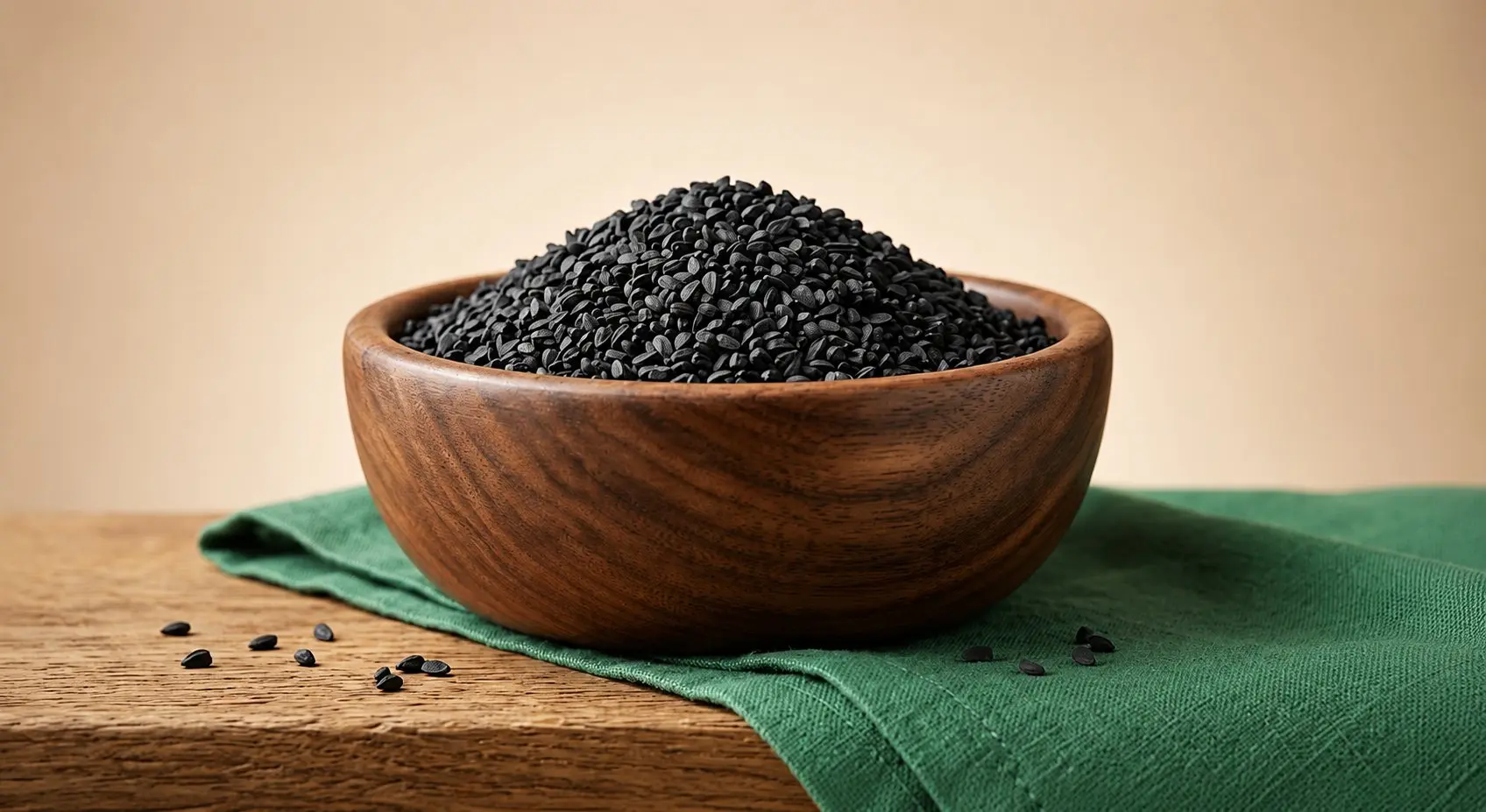
Every sourcing manager who has tried to import kalonji at scale knows the frustration: inconsistent moisture levels, mixed batches with foreign matter, unreliable lead times, and suppliers who disappear after the advance payment clears.
We are an Indian Kalonji exporter based in India, supplying export-grade nigella seeds to importers, food manufacturers, spice blenders, and distributors across Europe, the Middle East, North America, Australia, Africa, and Southeast Asia. This guide is written for the people who actually make sourcing decisions — procurement teams, quality managers, and business owners — and covers everything you need to know before placing your first or next order of kalonji from India.
We have kept this guide free of exaggerated claims — a practical breakdown of what kalonji is, how it is grown and processed in India, what quality parameters matter, and how a professional export partner manages the process from farm to your warehouse.
Our Story
Lakshvera Global Ventures was started with a simple observation: India grows some of the finest agricultural commodities in the world, yet many international buyers struggle to access consistent, well-documented, export-ready supply. Our team works directly with growers, aggregators, and processing units across kalonji-producing regions of India, applying uniform quality checks at every stage.
We do not see ourselves as a trading middleman — we see ourselves as an extension of our buyers' own quality and procurement departments, based in India. Our approach to every commodity remains the same: verify the source, control the process, and document everything.
Why International Buyers Choose India for Kalonji
India is one of the largest producers of nigella seeds in the world. There are a few structural reasons buyers keep coming back to Indian origin:
Scale of Production
India's farming base allows for consistent bulk volumes, which matters for buyers who need repeat container loads rather than one-off shipments.
Established Export Infrastructure
Indian ports and inland container depots are well set up for spice and agri-commodity exports, with experienced customs and phytosanitary processes.
Competitive Cost Structure
Domestic production costs, combined with efficient logistics corridors, allow competitive FOB and CIF pricing without compromising on grading standards.
Wide Grade Availability
Available across multiple size and purity grades — whole seed for bakery topping or cleaned seed for oil extraction.
Experience With International Compliance
Established exporters are familiar with the documentation, labeling, and phytosanitary requirements of major import markets, reducing friction at the buyer's port of entry.
None of this means every Indian supplier delivers consistent quality — it simply means the underlying supply base and infrastructure exist. The difference between a good shipment and a problematic one usually comes down to the exporter's own internal quality process.
What is Kalonji? A Quick Primer for Buyers
Kalonji, also known as nigella seeds or black seeds, refers to the small, angular black seeds of the Nigella sativa plant. It is a staple ingredient across South Asian, Middle Eastern, and Mediterranean cuisines, and has grown in popularity in Western bakery and seasoning applications over the past decade.
It is worth noting upfront: kalonji is sometimes confused with black cumin or onion seed due to regional naming conventions. As an exporter, we always confirm botanical identity and provide a Certificate of Analysis so there is no ambiguity in what is being shipped.
Appearance, Taste, and Aroma
For buyers who have never handled the raw material directly, here is what to expect on inspection:
Appearance
Small, angular, matte-black seeds, roughly 2–3.5mm, with a rough textured surface. Export-grade kalonji is uniform in color with minimal broken seeds or husk fragments.
Taste
A distinctive, slightly bitter and peppery flavor with a subtle onion-like note when cooked or toasted.
Aroma
Earthy and pungent, with hints of oregano and pepper. Fresh, correctly stored kalonji has a strong, clean aroma — flat or musty smell usually indicates age or poor storage.
Industrial Applications of Kalonji
Kalonji is a versatile ingredient with applications across multiple food industry segments. We supply buyers across each of the following categories:
Food Industry
Whole seed topping or ground ingredient in pickles, chutneys, and traditional recipe formulations.
Bakery Industry
Widely used as a topping on naan, focaccia, and artisan bread, plus cracker and savory biscuit formulations.
Seasoning Industry
A common component in spice blends, dukkah, panch phoron, and specialty seasoning mixes for HoReCa suppliers.
Ready-to-Eat Foods
Increasingly used by RTE and packaged food manufacturers to add authentic regional flavor to snacks, sauces, and condiments.
Spice Blends
A core ingredient in many proprietary and private-label spice blend formulations, valued for its distinct flavor.
Health & Wellness Industry
Sourced by wellness and natural ingredients companies for use in formulations. We supply raw material only and make no health or medicinal claims ourselves.
Why Indian Kalonji is Preferred Over Other Origins
Buyers comparing origins typically evaluate kalonji on consistency of seed size, oil content, purity, and moisture stability during transit. This reflects general market patterns rather than claims about any specific competing exporter.
Our Quality Standards
Every lot of kalonji we export passes through a structured internal quality process before it is approved for shipment, built around the specifications our buyers most commonly request:
We work with each buyer to confirm their specific tolerance requirements before production, since requirements can vary between a bakery-grade buyer and an oil-extraction buyer.
How We Source Kalonji
We source directly from growers and regional aggregators in established kalonji-producing belts rather than relying solely on open-market purchases. This gives us better visibility into harvest timing, initial moisture conditions, and lot traceability.
Pre-harvest coordination with growers on expected volumes
Initial quality screening at the point of procurement
Consolidation at our processing facility for uniform grading
Batch-wise documentation for traceability back to source region
Because kalonji yields can vary season to season, we maintain relationships across more than one producing region rather than depending on a single belt — giving us flexibility to meet buyer volume commitments without compromising on the agreed specification, and more stable pricing across the year. We also keep batch-level records that track a shipment back to its procurement window and processing date, which we can share alongside standard export documentation for buyers with their own supplier audit requirements.
Cleaning, Grading, and Sorting Process
Raw kalonji as harvested contains natural impurities — dust, husk, stones, and immature seeds — that must be removed before it meets export specification. Our processing sequence includes:
Quality Inspection
Before any lot is approved for packing, our quality team conducts a manual and instrument-based inspection covering moisture content, foreign matter percentage, seed count per gram, and visual/sensory evaluation. For buyers who require it, we can arrange third-party pre-shipment inspection through an independent agency, and we provide a Certificate of Analysis with each shipment.
Packaging Options
Packaging is selected based on the buyer's shipment volume, destination climate, and end use.
All packaging can be customized with buyer branding, batch coding, and country-specific labeling requirements.
Private Label Services
For supermarket chains, seasoning brands, and private label buyers, we offer full private label packaging services — from custom pouch and jar design through to retail-ready labeling that meets destination-market compliance requirements. We can work from a buyer's existing brand guidelines or support with packaging format recommendations based on shelf placement and category norms in the target market.
Export Documentation, Shipping & Container Loading
We prepare complete export documentation for every shipment, typically including:
Our documentation team coordinates directly with buyers' customs brokers to ensure paperwork matches destination import requirements, reducing the risk of port delays. We manage shipping through established freight forwarding partnerships, offering both FCL (Full Container Load) and, for smaller trial orders, LCL (Less than Container Load) options — with Incoterms FOB, CIF, or CFR depending on your logistics preference.
Global Export Markets We Serve
Each market has its own documentation and labeling nuances, and our team adjusts export paperwork accordingly for each destination.
Technical Specification (Standard Export Grade Kalonji)
Specifications can be adjusted based on buyer requirements and are confirmed in writing before production.
Storage and Handling Recommendations for Buyers
Even correctly processed kalonji can lose quality if stored poorly after arrival. We share the following guidance with our buyers as standard practice:
Frequently Asked Questions
Buyer Checklist Before Placing an Order
Beyond Kalonji
Alongside kalonji, we export a wide range of Indian agricultural products, allowing buyers to consolidate sourcing with a single trusted partner:
Chilli Products
- Chilli Flakes
- Whole Dry Red Chilli
- Red Chilli Powder
Whole Spices
- Cumin Seeds
- Sesame Seeds
Cereals & Millets
- Wheat
- Pearl Millet (Bajra)
- Sorghum (Jowar)
Spice Powders & Oil Seeds
- Turmeric Powder
- Coriander Powder
- Groundnuts
Final Thoughts
Sourcing kalonji from India does not need to be a gamble. With a clear specification, a documented quality process, and an export partner who communicates transparently at every stage, buyers can build a dependable, repeatable supply chain rather than a one-off transaction.
Looking for a Reliable Indian Kalonji Exporter?
Reach out to us with your required specifications, target volumes, and destination port, and our export team will respond with a formal quotation, product samples, and full technical documentation.