Indian Groundnut Exporter: Premium Quality Bulk Groundnuts & Peanut Kernels for Global Buyers
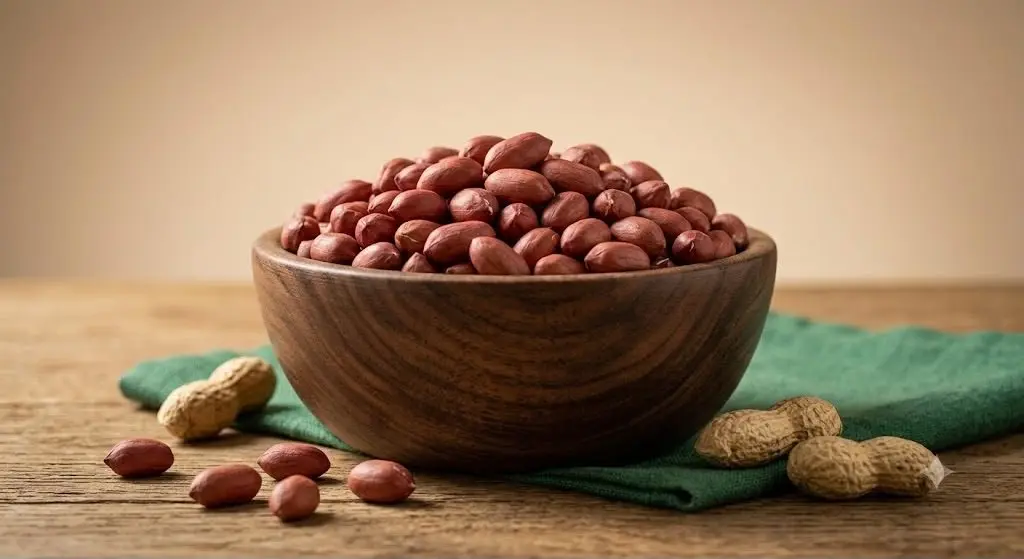
Sourcing groundnuts from a new country is rarely about the product alone. Will the moisture level hold up during a six-week sea voyage? Will the kernel size in the sample match the kernel size in the container? Is the supplier's understanding of aflatoxin risk as serious as it needs to be? Will documentation arrive correctly and on time, or will a shipment sit at port because of a missing certificate?
These are the questions that actually decide whether a sourcing relationship works — not marketing language. Anyone who has managed procurement for a snack factory, a peanut butter production line, or a wholesale nut distribution business knows that consistency and communication matter more than a glossy brochure.
Lakshvera Global Ventures is an Indian agricultural products exporter that connects international buyers with quality-focused Indian agricultural products, including groundnuts. This guide covers what groundnuts are, how Indian supply works, what quality parameters matter, how processing and packaging are typically handled, and what documentation to expect — plainly, without vague promises.
About Lakshvera Global Ventures
Lakshvera Global Ventures is an India-based agricultural export business built around a straightforward idea: international buyers need a supplier who understands both the agricultural side of sourcing and the commercial realities of export trade.
We do not claim ownership of processing plants, laboratories, or farmland, and we do not quote fabricated export volumes or customer counts. We would rather earn trust through how we handle your enquiry than through unverifiable claims on a webpage.
What Are Groundnuts?
The groundnut (Arachis hypogaea) is a legume, not a true nut — a distinction that matters commercially, particularly for allergen labelling and regulatory classification in some export markets. Unusually for a legume, the plant flowers above ground but develops its pods underground, which is where the name "groundnut" comes from. In North American English, the same crop and its kernel are almost always called the peanut.
Groundnuts are commercially significant because the kernel serves as both a food ingredient and an oilseed. The same base crop, depending on grade and processing, can end up in a snack packet, a jar of peanut butter, a bakery formulation, or a bottle of cooking oil.
Groundnuts vs Peanuts: Understanding the Terminology
Groundnut
More commonly used in India, the UK, and much of Commonwealth trade — referring to the whole crop, in-shell or shelled.
Peanut
More common in North American and international food-manufacturing contexts, often referring to the edible kernel or downstream products.
Groundnut / Peanut Kernel
Generally refer to the same thing: the shelled, edible seed inside the pod.
For procurement purposes, the safest practice is to specify the exact form, grade, size, and processing stage required — regardless of which regional term is used in correspondence — and confirm this against a written specification sheet before finalising an order.
Why India Is an Important Source of Groundnuts
Major Groundnut-Growing Regions in India
Rather than presenting a fixed list as current fact, three practical points matter more to buyers:
Crop availability shifts by season and year with rainfall and sowing patterns
Quality characteristics — kernel size, oil content, moisture — vary by growing region
Buyer specifications, not regional branding, should drive sourcing decisions
We do not present a fixed sourcing region as a standing claim, since this should be confirmed at the time of enquiry based on current-season availability and the buyer's specification.
Groundnut Cultivation and Harvesting
Cultivation → Crop Development → Harvesting → Drying → Digging/Lifting → Separation → Cleaning → Storage
Moisture control at harvest and during storage is one of the single biggest factors influencing downstream quality and food safety — more so than almost any other stage in the supply chain.
Types and Forms of Groundnuts
In-Shell Groundnuts
Unshelled pods, sometimes used for roasting or further processing.
Shelled Kernels
The edible seed removed from the shell — the most common form for food-manufacturing use.
Raw & Blanched Kernels
Raw kernels are unprocessed beyond cleaning and grading; blanched kernels have the skin removed, used in confectionery and snack applications.
Split & Processed Kernels
Split kernels are naturally or mechanically separated halves; processed kernels have undergone steps such as roasting, per buyer requirement.
Which forms are available at any given time depends on current sourcing arrangements and should be confirmed directly against your specification.
Groundnut Kernels
The groundnut kernel is the form most relevant to food manufacturers, snack producers, and ingredient distributors, since it is the direct input for roasting, grinding, or further processing. Kernels are typically assessed and traded against a combination of:
Key Quality Parameters
Acceptable ranges are always buyer- and market-specific. International buyers evaluating groundnut kernels commonly assess:
A Note on Aflatoxin
Aflatoxin is a naturally occurring mycotoxin produced by certain moulds (Aspergillus species) that can develop in groundnuts under poor drying, storage, or handling conditions. It is one of the most heavily regulated food-safety concerns in the global groundnut trade, and different destination markets set different maximum permissible limits.
We take this seriously as a category-defining food-safety issue. We do not state that any specific shipment meets a particular regulatory aflatoxin limit unless this has been confirmed through testing appropriate to that shipment and destination. Buyers with strict aflatoxin requirements should specify their required testing protocol and acceptable limits at the enquiry stage, and request supporting documentation such as a Certificate of Analysis.
Illustrative Specification Table
The table below shows the categories a typical groundnut purchase specification covers. It is illustrative only — every field is confirmed against the buyer's actual purchase requirement.
What International Buyers Should Look For
Experienced buyers tend to evaluate a supplier on process, not just on a single sample:
Cleaning, Grading and Processing
Before groundnuts reach export-ready condition, cleaning and sorting remove foreign matter and separate kernels that do not meet the target grade. Depending on the buyer's specification, further processing steps may include:
We work with appropriate sourcing and processing partners to meet buyer requirements. We do not represent ourselves as owning processing facilities, and any specific processing capability should be confirmed for your order rather than assumed.
Quality Inspection & Food Safety
Before shipment, quality inspection typically evaluates physical appearance, purity, moisture, kernel size distribution, colour, odour, and defect levels against the agreed specification. Depending on buyer requirements, this can include a Certificate of Analysis (COA), third-party inspection, and laboratory testing for parameters such as aflatoxin or microbiological load — available as options to build into the order, not automatic inclusions.
Food safety rests on moisture management, hygienic handling, proper storage, pest control, foreign matter control, aflatoxin awareness and testing, and destination-specific regulations. We do not describe any product as "100% safe" — food safety is managed through documented process and testing, not marketing language.
Applications of Groundnuts
Snack Industry
Roasted peanuts, salted snacks, coated and flavoured peanut snacks, and mixed nut products.
Peanut Butter Industry
A core raw material where consistency of kernel quality and flavour profile matters significantly.
Confectionery
Chocolate-coated peanut products, peanut-based sweets, bars, and confectionery fillings.
Bakery Industry
Cookies, biscuits, bakery toppings, and peanut-containing bakery formulations.
Food Manufacturing
A general bulk food ingredient across a wide range of manufactured food products.
Groundnut Oil Industry
Processed into groundnut oil (peanut oil) for food manufacturing and food service.
Why Food Manufacturers Source Groundnuts in Bulk
How Lakshvera Approaches Groundnut Sourcing
Understanding the specification
Supplier & partner evaluation
Raw material selection
Inspection & quality checks
Cleaning, sorting & grading coordination
Packaging & shipment documentation
Packaging Options
We do not quote fixed bag weights or packaging specifications in general content, since these should be confirmed against your specific order and destination-market packaging regulations.
Private Label Groundnuts
For brand owners and retail-facing buyers, private-label sourcing typically requires coordination on packaging format, brand artwork, product information, batch and traceability details, and label requirements (language, allergen declarations, and other mandatory elements).
We support private-label packaging coordination based on buyer specification, but we do not represent that we can guarantee regulatory approval in any destination market — that responsibility sits with the buyer's compliance process, informed by accurate product documentation from our side.
Export Documentation, Shipping & Logistics
Commonly required export documents include:
Shipments typically move as FCL (Full Container Load) for bulk orders, or occasionally LCL for smaller trial orders. Common Incoterms include FOB (seller delivers on board at origin, buyer bears onward cost/risk), CFR (seller arranges and pays freight, risk transfers at origin), and CIF (as CFR, plus marine insurance arranged by the seller).
Shipment planning involves careful attention to container loading practices to avoid moisture buildup and condensation ("container rain"), cargo protection through appropriate liners, and coordination with port and shipping schedules.
Global Markets for Indian Groundnuts
These are regions where Indian groundnuts are commercially relevant based on global trade patterns, not a fixed list of active export destinations. Buyers should confirm current shipping capability to their specific country at the enquiry stage.
Why Buyers Choose Lakshvera Global Ventures
Storage Recommendations
International Buyer Checklist
Many sourcing disputes trace back to a specification point that was assumed rather than confirmed in writing:
Frequently Asked Questions
Lakshvera Product Portfolio
Groundnuts are one part of a broader range of Indian agricultural products we work with, simplifying sourcing for buyers who purchase multiple commodities from India.
Chilli Products
- Chilli Flakes
- Whole Dry Red Chilli
- Red Chilli Powder
Spices & Seeds
- Cumin Seeds
- Kalonji
- Sesame Seeds
Cereals & Millets
- Wheat
- Pearl Millet (Bajra)
- Sorghum (Jowar)
Spice Powders
- Turmeric Powder
- Coriander Powder
For buyers managing multi-origin, multi-commodity procurement, sourcing several categories through a single, established point of contact can reduce supplier-management overhead.
Conclusion
Sourcing groundnuts internationally comes down to a fairly short list of things that actually matter: a clear specification, honest communication about what can and can't be confirmed, consistent quality across repeat shipments, sensible packaging, and documentation that doesn't create delays at port.
Looking for a Reliable Indian Groundnut Exporter?
If you're evaluating Indian groundnuts for your next purchase order, we'd like to hear your specification — samples, a detailed quotation, bulk supply coordination, private-label packaging, or export documentation support.