The Complete Buyer's Guide to Sourcing Premium Indian Cumin Seeds
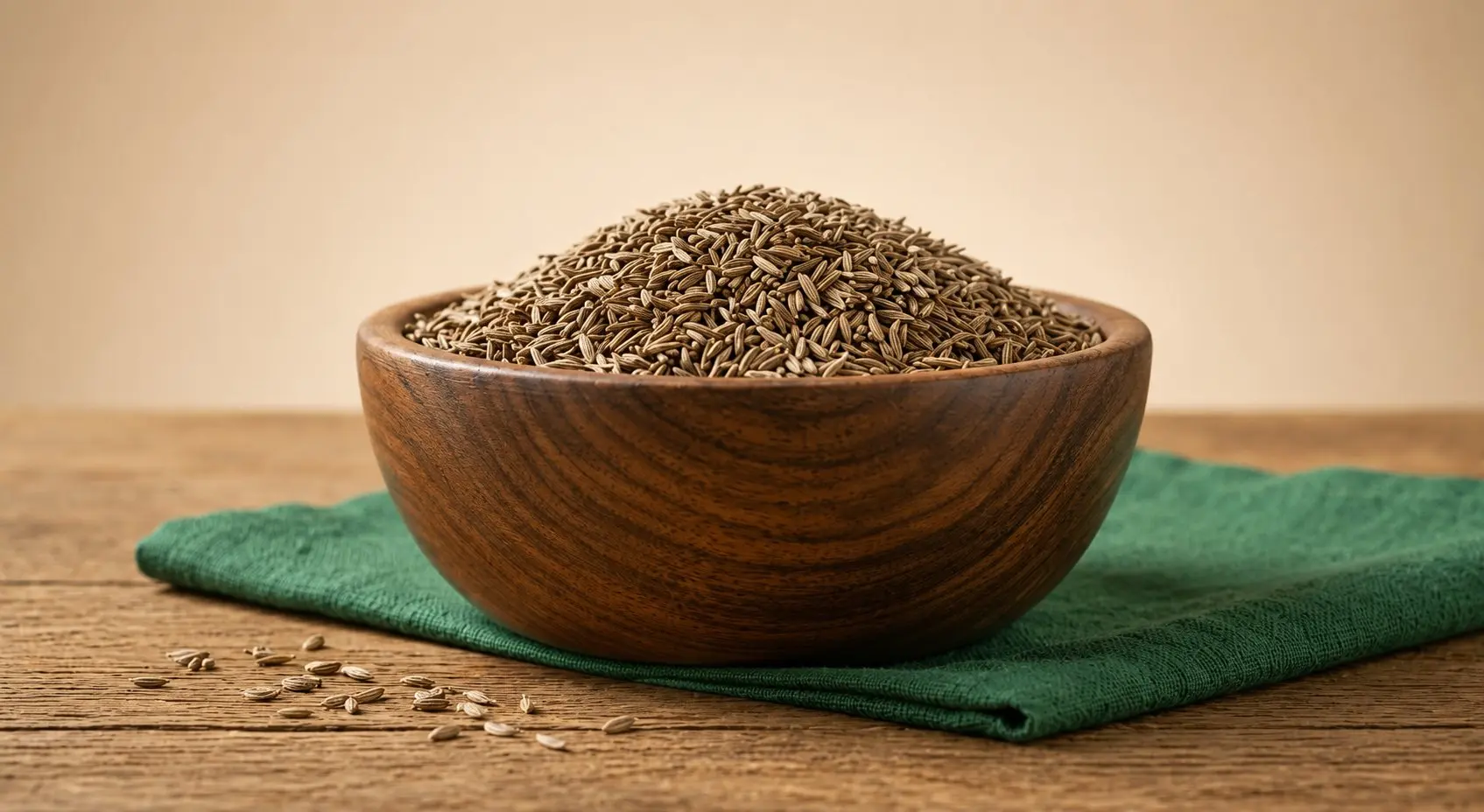
Cumin is one of the few spices that almost every kitchen in the world depends on, yet very few buyers ever see how it travels from a farmer's field in Gujarat or Rajasthan to a spice jar on a supermarket shelf in Hamburg, Dubai, or Toronto.
At Lakshvera Global Ventures, we spend our days in that space between the two — working with farming communities, processing units, quality labs, and shipping lines so that the cumin seeds our buyers receive are consistent, clean, and ready for their production lines or retail shelves.
This guide was written for procurement managers, importers, food manufacturers, and private label buyers who want to understand what actually goes into sourcing Indian cumin seeds at export volume — grades, moisture levels, packaging, container loading, and documentation.
About Lakshvera Global Ventures
Lakshvera Global Ventures is an India-based exporter of agricultural products, built around a simple idea: buyers overseas should be able to source Indian spices, grains, and oilseeds with the same confidence they would source from a domestic supplier in their own country.
We do not claim to be the biggest exporter from India. What we aim to be is a dependable one — the kind of partner a procurement team can plan a season's supply around, built on three things we believe matter most: consistent quality from shipment to shipment, transparent communication before and after the order is placed, and documentation that makes customs clearance predictable rather than stressful.
Why India Is the World's Leading Producer of Cumin Seeds
India grows and exports more cumin than any other country, and the reasons are largely geographic and agronomic. Cumin needs a dry climate, well-drained sandy or loamy soil, and a defined cool-to-warm growing window — conditions that the semi-arid belts of Gujarat and Rajasthan provide almost naturally. Generations of farmers in these regions have refined cumin cultivation into a specialised skill, often growing it as a winter crop in rotation with other pulses and oilseeds.
Because so much of India's cumin is grown within a relatively compact geographic belt, the supply chain around it — cleaning units, Sortex facilities, testing labs, and export packing houses — has developed alongside it, allowing Indian cumin to be sourced, processed, and shipped at scale without the seed changing hands too many times between farm and port.
What Are Cumin Seeds?
Cumin seeds are the dried fruit of the Cuminum cyminum plant, a flowering plant in the parsley family. Each seed is small, oblong, and ridged, carrying the warm, slightly bitter, earthy aroma that defines so much of Indian, Middle Eastern, North African, and Latin American cooking. In trade terminology, cumin is often referred to by its Hindi name, jeera, particularly in South Asian and Middle Eastern markets.
Cumin is sold whole and further processed into cumin powder, but the whole seed remains the primary form traded internationally because it retains its aroma and oil content far longer than ground cumin.
A Short History of Cumin
Cumin is one of the oldest spices used by human civilisation, with archaeological evidence of its use going back thousands of years across the Nile Valley and the eastern Mediterranean. It travelled along early spice trade routes into South Asia, where the climate of what is now Gujarat and Rajasthan proved especially suited to its cultivation. Over centuries, India shifted from being simply a consumer of cumin to becoming its largest grower and exporter — a position it continues to hold in the global spice trade today.
Growing Regions in India & Harvest Season
The majority of India's cumin is cultivated across two states:
Gujarat
Particularly Banaskantha, Patan, Mehsana, and Kutch — known for large-scale cumin farming and well-established processing infrastructure.
Rajasthan
Particularly Jodhpur, Nagaur, Barmer, and Jalore — the dry desert-adjacent climate supports strong seed development and oil content.
Smaller volumes are also grown in parts of Madhya Pradesh. Cumin is a winter (rabi) crop in India — typically sown between October and November and harvested between February and March, once the plant dries naturally in the field. Export buyers planning annual contracts often align procurement schedules with this harvest window, since fresh-season cumin generally offers the best aroma and oil retention.
Types of Indian Cumin
Indian cumin is broadly categorised by seed size, colour, and cleaning standard rather than by distinct varietal names. Buyers typically request one of the following:
Singapore Quality (99% Pure)
The most widely exported grade, Sortex-cleaned with minimal foreign matter.
Europe Quality (99.5%+ Pure)
A stricter cleaning and purity standard, often required for supermarket private label and food manufacturing contracts.
Machine Clean Cumin
Mechanically cleaned, suitable for buyers with their own further processing capability.
Bold Cumin Seeds
Larger, plumper seeds preferred by buyers who want a premium visual appearance for retail packaging.
We help buyers match the right grade to their end use rather than defaulting to the highest purity percentage when it isn't necessary for their process.
Appearance, Colour, Size, Aroma, and Taste Profile
Appearance & Colour
Slender, oblong, ridged lengthwise, tapering at both ends. Export-grade cumin shows a consistent greenish-brown to light brown colour — dull or overly dark seeds usually indicate poor storage or an older crop.
Size
Standard Indian cumin measures roughly 4–5 mm in length. Bold cumin varieties run slightly larger, preferred for visual appeal in retail packs.
Aroma & Taste
Strong, warm, slightly peppery aroma with earthy undertones. Warm, nutty, slightly bitter flavour with a smoky undertone when dry-roasted or tempered in hot oil.
Industrial Applications
Cumin's versatility is one of the reasons demand stays steady across so many buyer categories.
Food Manufacturing
A core ingredient in spice blends, marinades, sauces, and processed food seasoning bases.
Seasoning Industry
A foundational spice in curry powders, taco seasoning, chili blends, and Middle Eastern mixes such as baharat and za'atar.
Bakery Industry
Used in savoury breads, crackers, and flatbreads, particularly in Middle Eastern and Mediterranean bakery formulations.
Ready-to-Eat Foods
An essential flavouring agent in packaged snacks, instant meal kits, and ready-to-eat curry and rice products.
Oil Extraction
Cumin seed oil is extracted for use in flavouring concentrates and select food and fragrance applications.
Retail Packaging
Sold directly to consumers in whole and ground form under private label and branded retail packaging.
Why International Buyers Prefer Indian Cumin
Buyers across Europe, the Middle East, North America, and beyond consistently source cumin from India for a combination of reasons that go beyond price:
How Lakshvera Sources Cumin
Our sourcing process begins well before the harvest season. We work with farming clusters and regional traders in Gujarat and Rajasthan whom we have engaged with over multiple seasons, giving us visibility into crop conditions, expected yields, and quality trends ahead of the buying season. Raw cumin is procured in lots, sampled, and moved to our processing partners for cleaning and grading before it is confirmed for any export order.
We do not source opportunistically from unfamiliar suppliers purely to fill an order. Consistency across shipments matters more to our long-term buyer relationships than securing the lowest possible raw material cost on a single transaction.
Cleaning, Grading, and Sortex Processing
Once raw cumin arrives at the processing facility, it goes through a defined sequence:
Pre-cleaning — removal of stones, dust, and plant debris via mechanical sieves and air blowers
Sortex (optical) cleaning — colour-sorting removes discoloured and foreign seeds
Grading — seeds separated by size and density for uniform lots
Final polishing & moisture check — protects shelf life during transit
This multi-stage process is what allows us to consistently supply 99% and 99.5%+ purity grades depending on buyer requirement.
Quality Inspection and Laboratory Testing
Before any consignment is packed for export, we carry out internal quality checks covering appearance, aroma, moisture, and foreign matter content. For buyers who require it, we can arrange third-party laboratory testing and pre-shipment inspection through independent agencies, covering parameters such as pesticide residue, aflatoxin levels, and microbiological analysis, in line with the specific import requirements of the destination country. We encourage buyers importing for food manufacturing or retail private label to specify any additional testing or certification requirements at the inquiry stage.
Quality Parameters and Technical Specifications
Quality Parameters
Technical Specification
Actual parameters vary by crop season and are confirmed with a certificate of analysis for each shipment. Figures above represent typical export-standard ranges and are not a guarantee applicable to every lot.
Packaging Options and Private Labelling
We offer packaging formats suited to different buyer categories, from bulk industrial buyers to retail-focused importers.
For buyers developing their own retail brand, we support private labelling — including custom pouch sizes, printed packaging as per buyer artwork, and barcode placement — subject to minimum order quantities discussed at the inquiry stage.
Container Loading, Documentation, and Shipping
20 ft Container
700–800 bags (25 kg) — approximately 18–20 metric tons
40 ft Container
1,400–1,600 bags (25 kg) — approximately 26–28 metric tons
Actual loadable quantity depends on packaging type, palletisation, and buyer-specific loading requirements.
We prepare complete export documentation for every shipment, typically including:
Shipping is arranged primarily through major Indian ports, including Mundra and Nhava Sheva (JNPT), with freight forwarding coordinated according to the buyer's preferred Incoterm — FOB, CIF, or CNF are the most commonly used terms in our cumin export contracts.
Global Export Markets
Why Buyers Choose Lakshvera
Storage Recommendations
To preserve aroma, colour, and shelf life after the cumin reaches your facility, we recommend:
Proper storage is particularly important for buyers holding inventory for more than a few months, as cumin's essential oil content — the source of its aroma and flavour strength — gradually diminishes over time even under good conditions.
Buyer Checklist Before Placing an Order
Frequently Asked Questions
Our Complete Product Portfolio
While cumin seeds are one of our core export products, we supply a wider range of Indian agricultural products that many buyers combine into a single shipment to optimise container space and freight cost:
Chilli Products
- Chilli Flakes
- Whole Dry Red Chilli
- Red Chilli Powder
Whole Spices
- Kalonji
- Sesame Seeds
Cereals & Millets
- Wheat
- Pearl Millet (Bajra)
- Sorghum (Jowar)
Spice Powders & Oil Seeds
- Turmeric Powder
- Coriander Powder
- Groundnuts
If you are sourcing multiple categories, our team can help you consolidate products from this portfolio into a single, cost-efficient shipment.
Conclusion
Sourcing cumin seeds at export volume is not simply a matter of finding the lowest price per kilogram. It involves understanding grade specifications, verifying processing standards, confirming documentation requirements, and working with a supplier who communicates clearly through each stage of the order — from sample approval to container loading.
Looking for a Reliable Indian Cumin Seeds Exporter?
Reach out to us with your required quantity, packaging preference, and destination port, and our export team will respond with a formal quotation, product samples, and full technical documentation.